










Our website uses cookies for the purpose of service and traffic analysis as well as advertisement. All cookies are used in accordance with our Privacy Policy. Please accept the cookies by clicking the Accept button below.
Souemoncho
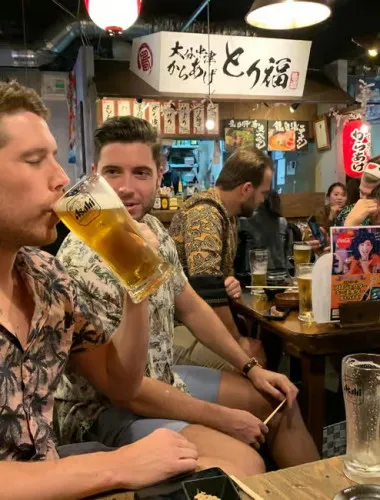
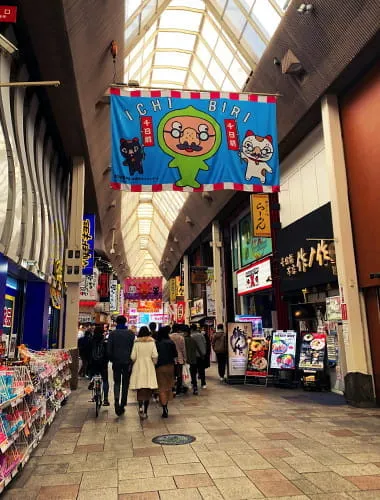
Although the official reading is “Sōemonchō,” locals often call it “Soemonchō.” The name is known nationwide thanks to the popular song “Soemonchō Blues.” The area called Soemonchō runs along the north side of the Dōtonbori Canal, from Ebisu Bridge to Nipponbashi. The place name comes from Yamanokuchiya Sōemon, who served as a town elder (the leading town official) in the mid-17th century. From the Edo period until before World War II, Soemonchō flourished as a high-class geisha district, but in 2003 the teahouse “Nanchi Yamato-ya,” which had opened in 1877 (Meiji 10), closed. From the period of rapid economic growth (roughly 1955–1973), the area shifted from a geisha district to an entertainment quarter packed with clubs, cabarets, and bars. The district is quiet during the day, but at night it transforms into a lively neon-lit neighborhood. It has a retro Showa-era vibe reminiscent of Tokyo’s Kabukichō.
Address
Soemonchō 2–7-chōme, Chuo-ku, Osaka City, Osaka, Japan
Access
About a 7-minute walk from Exit 14 of Kintetsu / Osaka Metro Midosuji Line Namba Station; about a 3-minute walk from Exit 2 of Kintetsu / Osaka Metro Sakaisuji Line Nihonbashi Station
Telephone
Varies by shop
Price
Varies by shop
Business Hours
Varies by shop