 1 - 2 hours
 Available languages: English
 1-6
1-6

 Immediate Booking
  Request Booking
Experience details
ourney into the sacred heart of Kumano, where divine forces are said to descend upon earth through mountains, trees, and stones. Guided by a knowledgeable local expert, this tour leads you through two of the most revered sites of the Kumano faith — Kumano Hayatama Taisha and Kamikura Shrine — both central to the ancient pilgrimage tradition that links the physical and spiritual worlds.
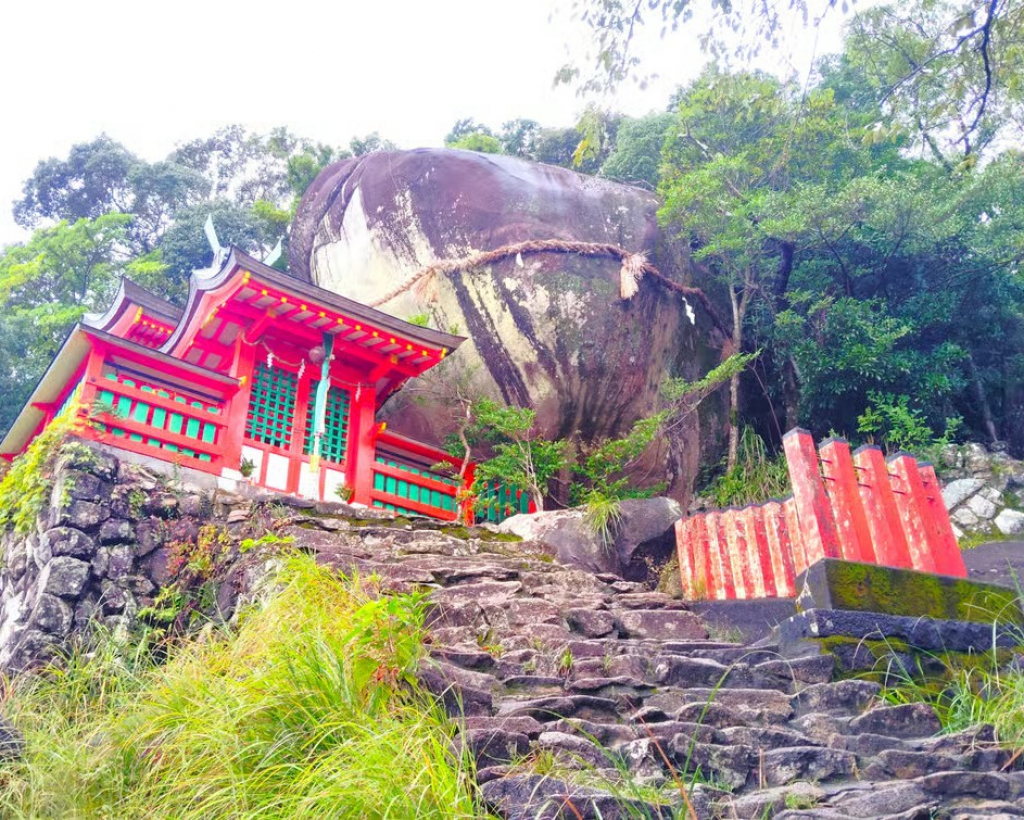
Among the three great Kumano shrines, Kumano Hayatama Taisha represents rebirth and renewal, complementing Kumano Hongu Taisha, symbolizing the afterlife, and Kumano Nachi Taisha, associated with the present world. Together they form a triad where the soul journeys through death, purification, and rebirth. Hayatama Taisha, standing gracefully in Shingū (“new shrine”), enshrines Hayatama-no-Ōkami, a manifestation of Susanoo-no-Mikoto, the storm deity embodying both destruction and purification. It is said this sacred being descended upon the massive boulder Gotobiki-iwa at nearby Kamikura Shrine, and Hayatama Taisha was later built at the mountain’s base to make worship more accessible.
The shrine’s history spans over a millennium, intertwined with the rise of Kumano as a pilgrimage center. In the Heian period, emperors and nobles from Kyoto made repeated pilgrimages here, and Shingū flourished as a sacred gateway to the other two shrines. The town became a place where faith, nature, and community merged — a role it continues today.
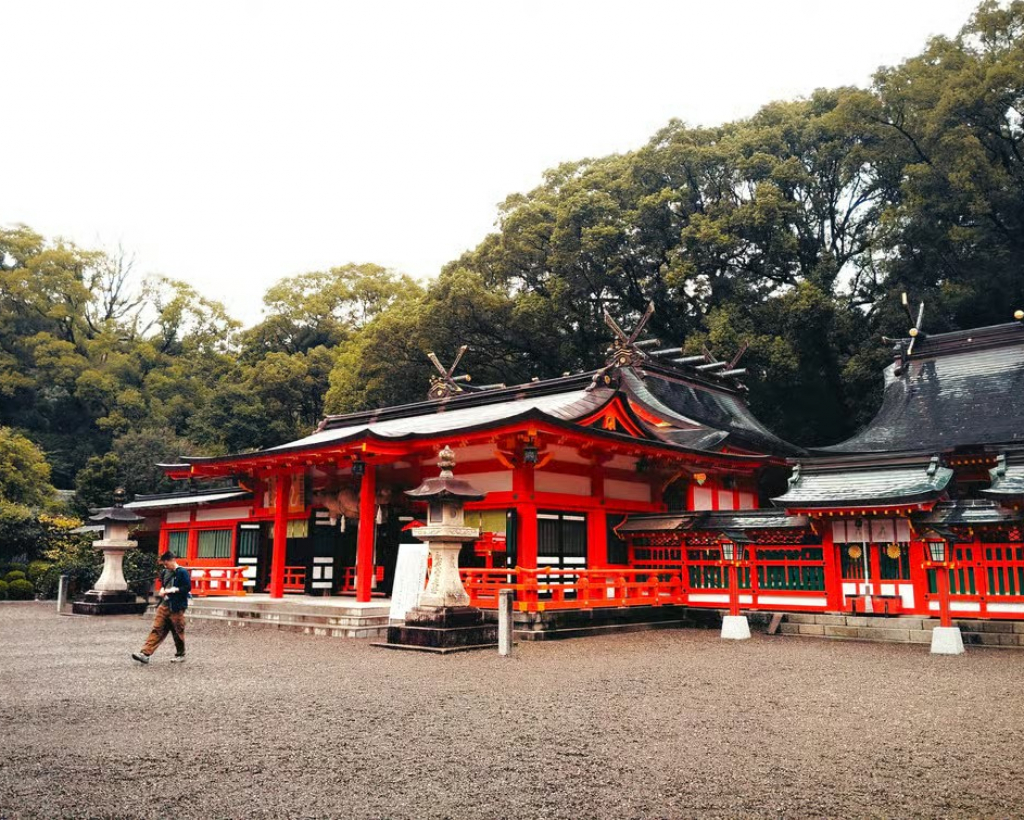
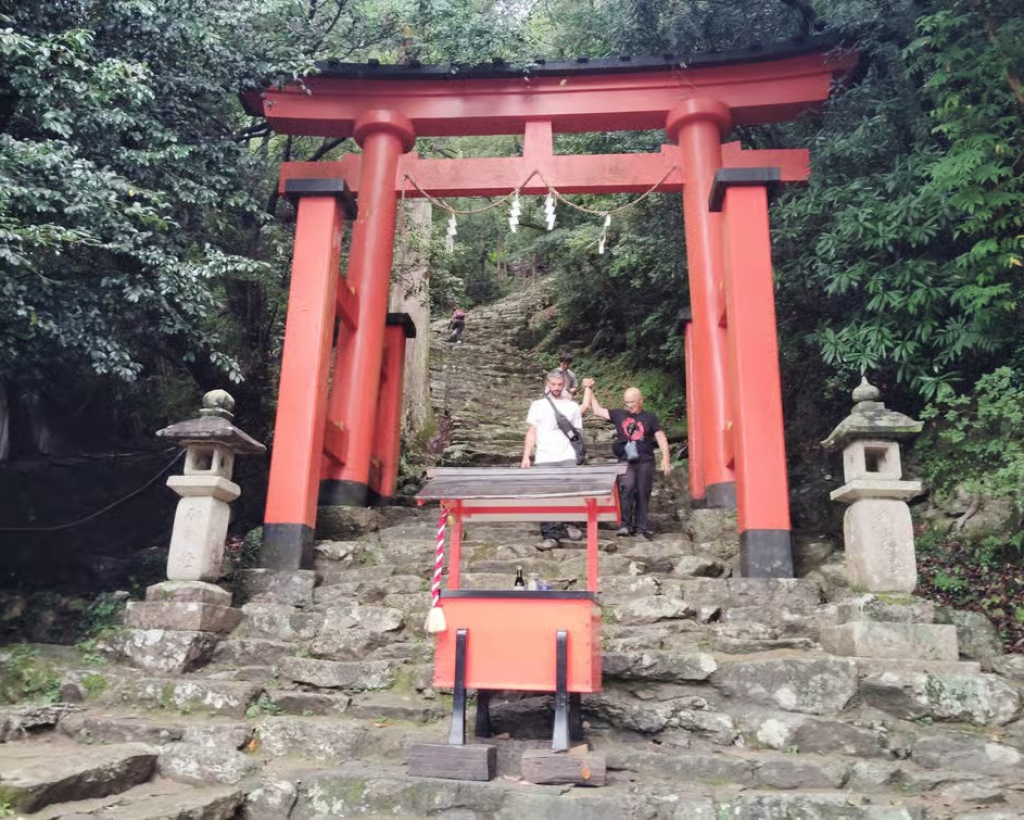
At the grand torii of Hayatama Taisha, your guide explains the origins of the Kumano faith and its reverence for nature’s sacred symbols, such as the ancient nagi tree. As you purify your hands at the water basin and walk the quiet approach to the main sanctuary, you will feel the divine presence that still dwells here. The vivid vermilion hall embodies renewal and the eternal cycle of life — central themes of Kumano’s spirituality.
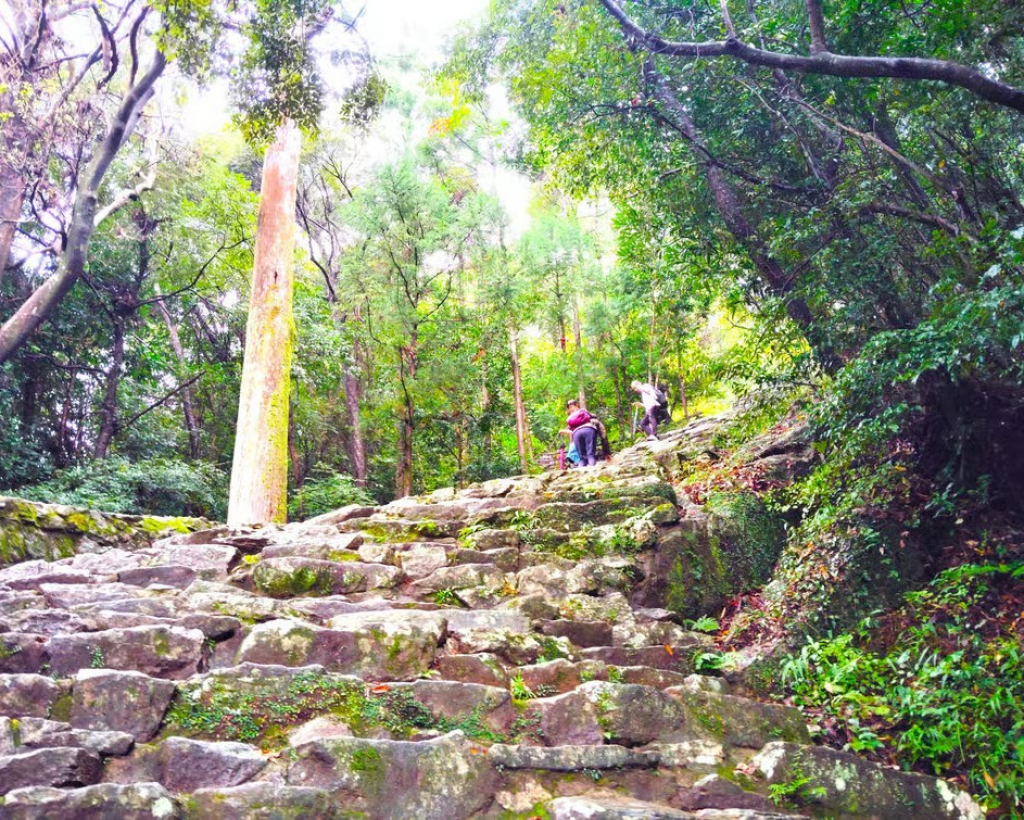
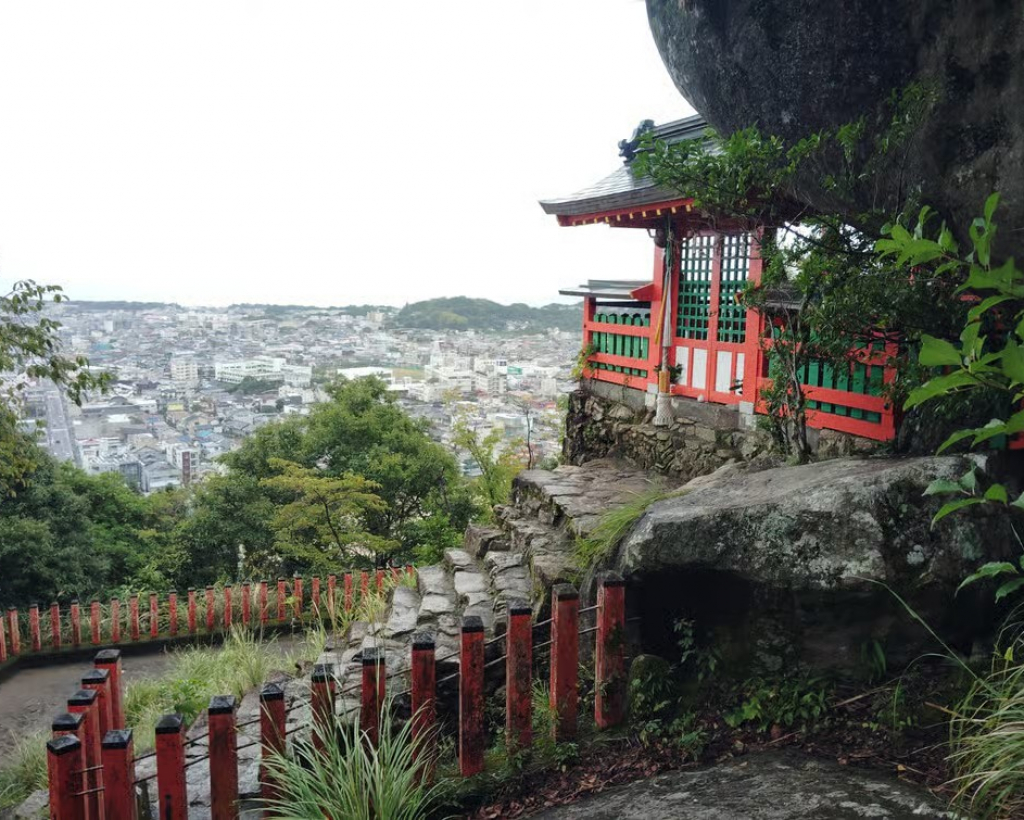
From there, the path leads to Kamikura Shrine, an awe-inspiring climb up steep stone steps cut into the mountain. Along the way, your guide shares the legend of Gotobiki-iwa, the rock upon which the gods are said to have descended. The ascent rewards you with a sweeping view of Shingū and the Pacific Ocean — a scene that has moved pilgrims for centuries. Here, myth and faith converge, and the boundary between human and divine feels as light as air.
This tour offers several options: a standard course beginning at the shrines, a convenient version with meeting and drop-off at Shingū Station, and an early-morning tour for those seeking the most tranquil atmosphere. In the quiet of dawn, as mist gathers around the torii and the mountains awaken, Kumano reveals its deepest spirit — a place where ancient devotion still breathes through stone, tree, and silence.
Among the three great Kumano shrines, Kumano Hayatama Taisha represents rebirth and renewal, complementing Kumano Hongu Taisha, symbolizing the afterlife, and Kumano Nachi Taisha, associated with the present world. Together they form a triad where the soul journeys through death, purification, and rebirth. Hayatama Taisha, standing gracefully in Shingū (“new shrine”), enshrines Hayatama-no-Ōkami, a manifestation of Susanoo-no-Mikoto, the storm deity embodying both destruction and purification. It is said this sacred being descended upon the massive boulder Gotobiki-iwa at nearby Kamikura Shrine, and Hayatama Taisha was later built at the mountain’s base to make worship more accessible.
The shrine’s history spans over a millennium, intertwined with the rise of Kumano as a pilgrimage center. In the Heian period, emperors and nobles from Kyoto made repeated pilgrimages here, and Shingū flourished as a sacred gateway to the other two shrines. The town became a place where faith, nature, and community merged — a role it continues today.
At the grand torii of Hayatama Taisha, your guide explains the origins of the Kumano faith and its reverence for nature’s sacred symbols, such as the ancient nagi tree. As you purify your hands at the water basin and walk the quiet approach to the main sanctuary, you will feel the divine presence that still dwells here. The vivid vermilion hall embodies renewal and the eternal cycle of life — central themes of Kumano’s spirituality.
From there, the path leads to Kamikura Shrine, an awe-inspiring climb up steep stone steps cut into the mountain. Along the way, your guide shares the legend of Gotobiki-iwa, the rock upon which the gods are said to have descended. The ascent rewards you with a sweeping view of Shingū and the Pacific Ocean — a scene that has moved pilgrims for centuries. Here, myth and faith converge, and the boundary between human and divine feels as light as air.
This tour offers several options: a standard course beginning at the shrines, a convenient version with meeting and drop-off at Shingū Station, and an early-morning tour for those seeking the most tranquil atmosphere. In the quiet of dawn, as mist gathers around the torii and the mountains awaken, Kumano reveals its deepest spirit — a place where ancient devotion still breathes through stone, tree, and silence.