






Our website uses cookies for the purpose of service and traffic analysis as well as advertisement. All cookies are used in accordance with our Privacy Policy. Please accept the cookies by clicking the Accept button below.
Mibudera Temple
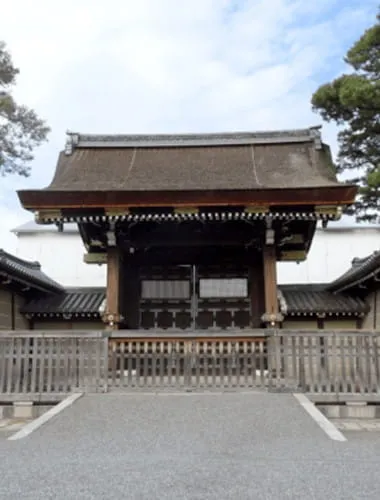
Mibu-dera is the head temple of the Ritsu sect in the Shijo-Omiya area of Kyoto. It was founded in 991 (Shoryaku 2) by the monk Kaiken. It is also known for its connection to the Shinsengumi: during the late Edo period, the group established its base nearby, and within the grounds is Mibu-zuka, where graves of members stand alongside a bust of Kondo Isami. Two major traditions keep the temple especially famous: the Setsubun-e event featuring the dedication of earthenware “horoku,” and the Mibu Nenbutsu Kyogen performances held in April and October. This kyogen tradition, said to date back to the Kamakura period, is explained as originating when the restorer monk Enkaku adapted nenbutsu preaching into silent, gesture-based performance because audiences could not hear the chanting well. It is essentially a silent drama with minimal musical accompaniment and some chorus, and also a masked performance—actors wrap head and face in white cloth and wear masks. It is designated an Important Intangible Folk Cultural Property of Japan. Historically, the area was also a low-lying farming zone suited to Kyoto greens cultivation and is associated with the origins of traditional Kyoto vegetables such as mibuna and mizuna. The temple is about a 15-minute walk from Hankyu Omiya Station, set within a residential neighborhood.
Address
〒604-8821 Bojo Bukkoji-kita-iru, Nakagyo Ward, Kyoto City, Kyoto Prefecture
Access
About a 15-minute walk from Hankyu Omiya Station
Telephone
075-841-3381
Price
Open precinct
Business Hours
08:30–16:30