










Our website uses cookies for the purpose of service and traffic analysis as well as advertisement. All cookies are used in accordance with our Privacy Policy. Please accept the cookies by clicking the Accept button below.
Nishi Honganji Temple
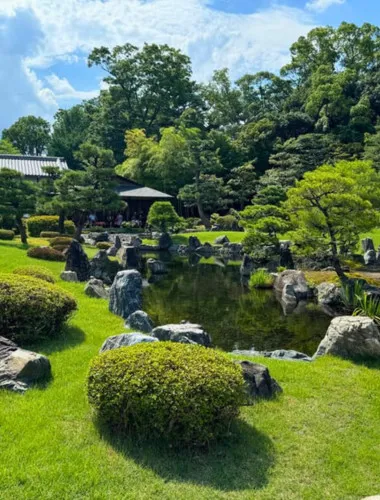
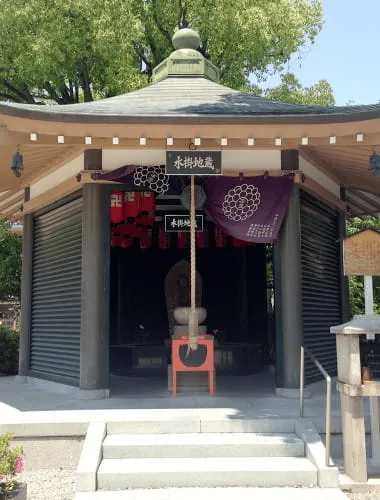
Nishi Hongan-ji Temple is the head temple of the Honganji School of Jodo Shinshu Buddhism and is formally known as Ryukokuzan Hongan-ji. To distinguish it from the Honganji temple of the Shingon sect located on Karasuma Street, the two temples are commonly referred to by their locations as Nishi Hongan-ji (West Hongan-ji) and Higashi Hongan-ji (East Hongan-ji). The origins of Nishi Hongan-ji date back to 1272, when Kakushinni, the daughter of Shinran Shonin, enshrined his remains at Higashiyama Otani. As the religious community gradually expanded, it faced opposition from other sects and moved frequently between regions such as Osaka and Wakayama for about 120 years. In 1591, Toyotomi Hideyoshi donated land, and the temple was relocated to its current site. The central hall of Nishi Hongan-ji is the Miedo Hall, which houses a wooden seated statue of Shinran Shonin said to be coated with lacquer mixed with the ashes from his cremation. The Shoin halls are outstanding examples of Momoyama-period shoin-style architecture, richly decorated with magnificent gold-leaf wall paintings and carvings. To the north of the Shoin stands the Kita Noh Stage, the oldest surviving Noh stage in Japan. Located about a 15-minute walk from Kyoto Station, Nishi Hongan-ji is one of the key sightseeing spots around the station area.
Address
〒600-8501 Kyoto Prefecture, Kyoto City, Shimogyo Ward, Horikawa-dori Hanayacho-sagaru, Honganji Monzen-cho
Access
15-minute walk from JR Kyoto Station
Telephone
075-371-5181
Price
Temple grounds free
Business Hours
05:30–17:00