








Our website uses cookies for the purpose of service and traffic analysis as well as advertisement. All cookies are used in accordance with our Privacy Policy. Please accept the cookies by clicking the Accept button below.
Kamogawa River
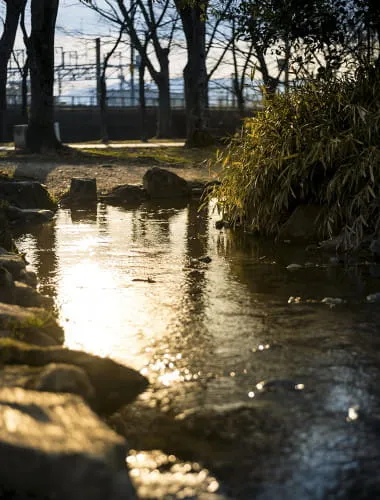
The Kamo River is a river approximately 23 km long that flows north to south through Kyoto City, from its source near Mount Sajikigatake to its confluence with the Katsura River. Under Japan’s River Act, the entire river is officially designated as the Kamo River, but it is commonly referred to as the Kamo River north of the Takano River confluence (Demachi) and as the Kamogawa River to the south. In the Heian period, it marked the eastern boundary of the capital, and in medieval times its riverbanks became a lively entertainment district attracting many performers. During the Azuchi–Momoyama period, Izumo no Okuni, famous for originating kabuki dance, emerged from this area. Today, the Kamo River is a beloved recreational space for locals, with people strolling, jogging, and relaxing along the riverbanks, which also include tennis courts. The sight of couples sitting at evenly spaced intervals along the river is considered one of Kyoto’s curiosities. More than 40 bridges cross the river, including Gojo Bridge, associated with the legendary encounter between Ushiwakamaru and Benkei, commemorated by a statue on its west side. The river offers seasonal beauty throughout the year, from cherry blossoms in spring and riverside dining platforms in summer to autumn foliage.
Address
〒604-0922 Kyoto Prefecture, Kyoto City, Nakagyo Ward, Higashiikusucho 489